Rheumatic heart disease is preventable, yet it continues to affect millions of people and claim hundreds of thousands of lives every year.
ACT Global is building practical infrastructure to help clinicians and health systems identify patients, support follow-up, improve care, and use data to strengthen RHD programs.
Your support helps extend that work to more communities, more sites, and more patients.
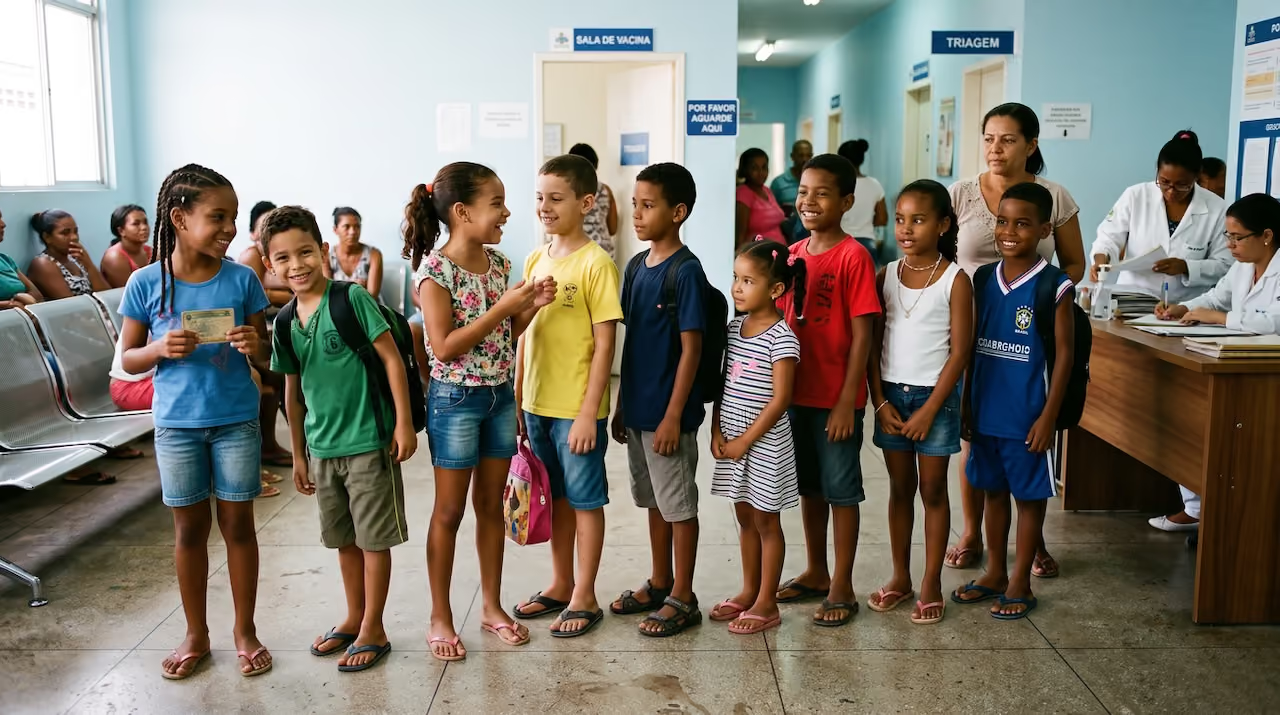
Many people living with RHD need long-term care. That means regular secondary prevention, cardiac review, and reliable follow-up, often for years at a time. In high-burden settings, clinical teams often manage this care with limited time, limited resources, and systems that were never designed to work together.
ACT Global supports the infrastructure that enables better care. Contributions help in several ways. They sustain and improve ACT, and support clinical training and site onboarding. They also strengthen quality improvement efforts and generate the evidence needed to raise RHD on the global health agenda. Partner organizations make these outcomes possible.
Support helps maintain and improve ACT, and expand it so more clinical teams can manage RHD care through a structured, scalable case management tool.
Support helps provide training resources and implementation guidance. It also funds practical tools for clinicians and local sites.
Support helps sites use data to identify care gaps and strengthen follow-up. It also supports better secondary prevention and ongoing outcome monitoring.
Support helps generate the evidence needed to improve RHD care and inform policy. It also keeps a preventable disease visible on the global health agenda.

Donations are currently processed through the Cincinnati Children’s giving platform.
Clinical sites and institutions working in RHD care can explore participation in ACT Global.
Organizations working in global health or cardiovascular care are welcome to reach out, as are those focused on research, capacity building, or health systems strengthening.
Clinicians and researchers are well placed to raise awareness of RHD, and advocates can help by sharing credible resources within their own networks.