ACT is a case management tool designed to support the care of patients with rheumatic heart disease.
It helps participating clinical teams capture standardized patient data, manage longitudinal follow-up, monitor critical care indicators, and use data to improve patient outcomes.

ACT supports both individual patient care and population-level management. It gives clinical teams a structured way to record diagnosis, treatment, follow-up, prophylaxis, procedures, outcomes, and key clinical indicators over time.
By standardizing data across sites, the platform also supports quality improvement, benchmarking, and ethically governed research.



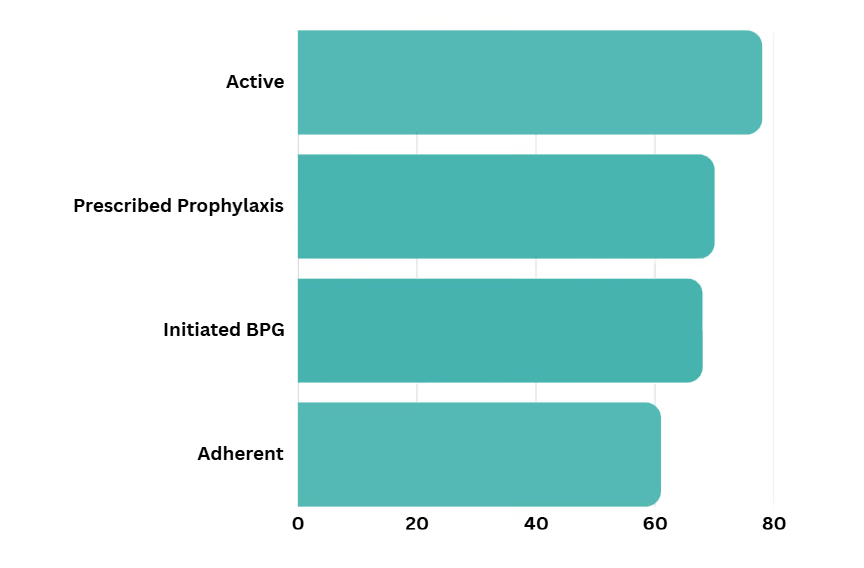
The RHD cascade allows ACT users to visualize the number of patients that are adherent (or not) to their secondary antibiotic prophylaxis (SAP) medication. Adherence on SAP is critical for managing RHD, and the ACT dashboard and tools within ACT alert users to patients that are lost to follow up or falling behind on their SAP medication.
ACT is a first of its kind RHD case management tool that supports clinical teams across the full RHD care pathway, from individual patient follow-up to population-level planning. To make the platform easier to understand, its core features can be grouped into four practical areas.
Patient summary cards display vital information at a glance, including adherence to prophylaxis, upcoming cardiology follow-ups, pending interventions, and overdue care items.
Consultation forms consolidate key visit information into a single workflow. Allergies, medications, interventional recommendations, cardiac complications, and prophylaxis prescriptions can carry forward to support continuity of care.
The platform captures cardiac interventions, including surgeries and interventional catheterizations. Dynamic fields prompt clinicians to record procedure-specific information consistently.
ACT supports post-procedural outcome tracking, including discharge and 30-day follow-up information. The platform flags missing critical information so teams can complete the patient record.
For patients on warfarin, the platform supports INR monitoring and helps clinicians review trends over time alongside dosing decisions.
Clinicians can use list view to review larger patient groups more efficiently, sort by priority indicators, and identify patients who need attention.
The platform can support the capture of congenital and acquired heart diseases beyond RHD, where local sites need a more centralized tool for cardiac patient management.
ACT can capture population-based screening data, including the number of people screened, demographic breakdowns, and the number of positive cases identified.
The waiting list feature helps teams review patients awaiting procedures, sort by priority or waiting time, and plan referral or procedural pathways.
Dashboards help teams visualize patient populations, review key metrics, monitor the RHD care cascade, and identify patterns that can inform site-level quality improvement.
Critical data flags help clinical teams identify missing information that may affect patient care, reporting, or research readiness. These flags support stronger data completeness and more consistent follow-up.
Site administrators can add users, assign role-based access, and manage clinics participating in patient care through ACT.
Where used, stock management tools help clinics track prophylactic antibiotic supply and estimate future needs based on assigned patients.
The case management tool is used by a range of stakeholders across the RHD care continuum:
Clinicians use ACT to manage patient care, track follow-up, review treatment histories, and identify patients who need clinical attention.
Health systems use ACT data to strengthen service planning and monitor care delivery. The same data helps identify gaps and supports more coordinated RHD programs.
Global health partners, including NGOs, funders, and public health organizations, can use aggregated evidence to understand RHD burden. That same evidence helps clarify investment needs and policy priorities.
Select an image to view it in more detail.
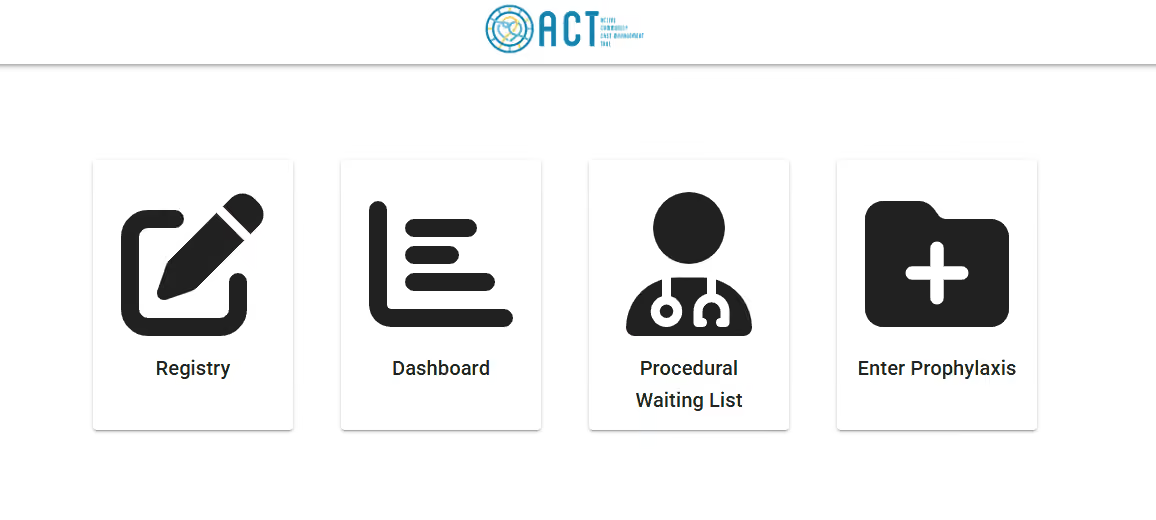
ACT Home Screen
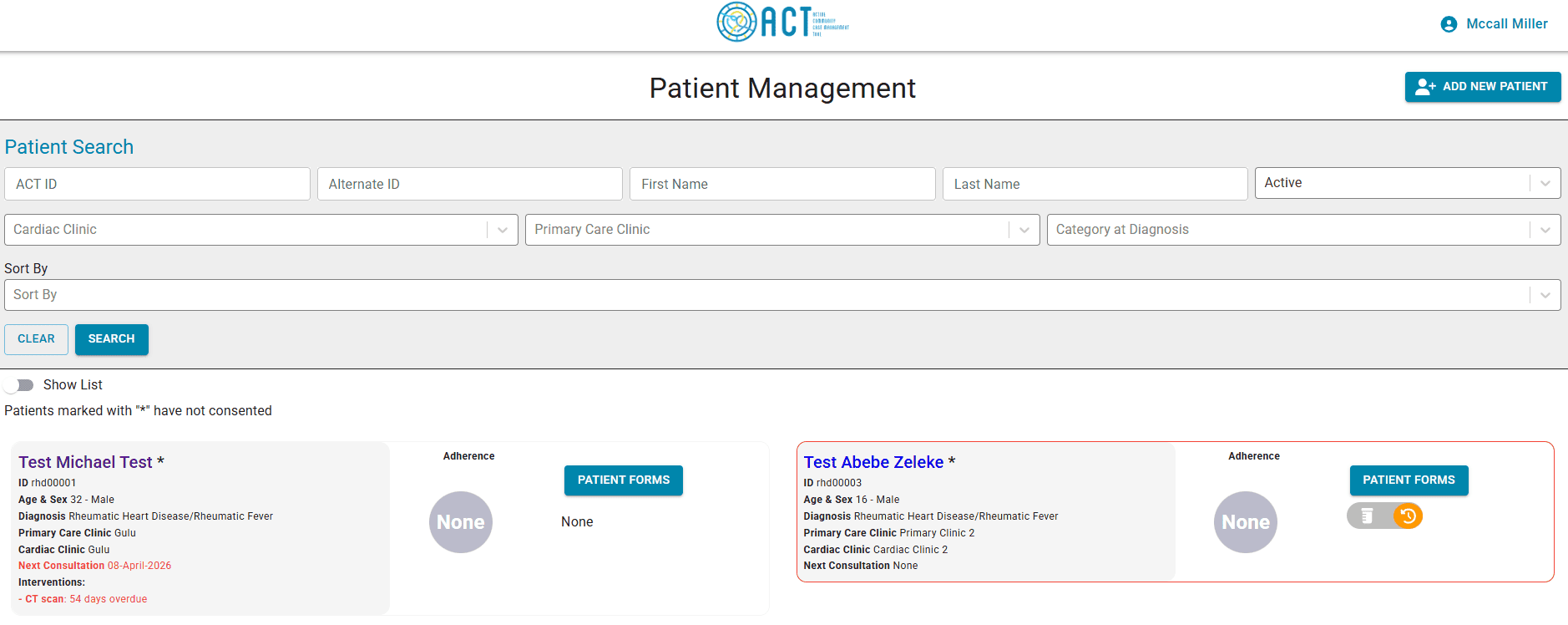
ACT Patient Management Screen
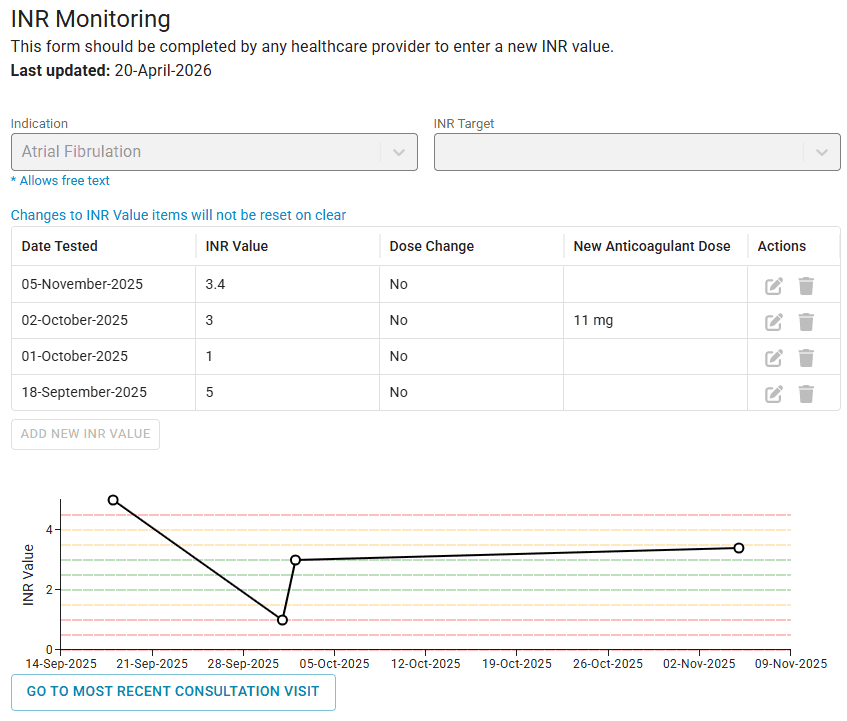
ACT INR Monitoring Form

ACT patient summary card

User management screen
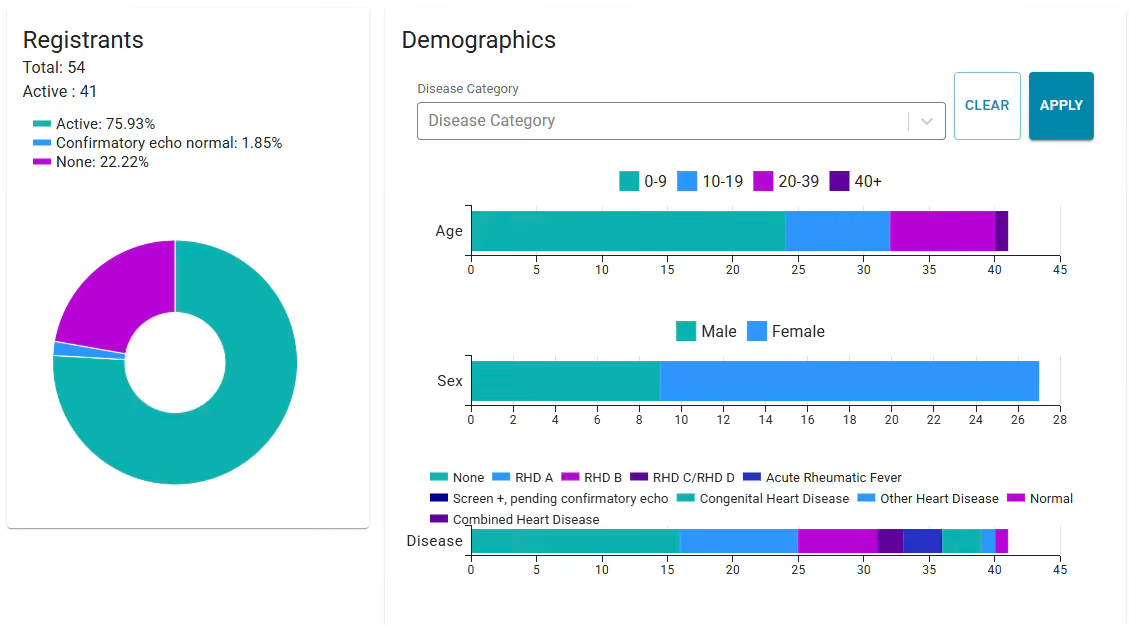
ACT dashboards
We support local sites with the tools, guidance and connections needed to integrate and use ACT effectively.

Access is available to local clinical sites. Institutions interested in joining should contact ACT Global to discuss eligibility, governance, onboarding, and training.
ACT is designed to support secure, privacy-conscious data management across participating jurisdictions. Final data protection wording should reflect ACT Global’s confirmed legal and regulatory framework.
Participating sites own their own data and can access it and use it freely including for research subject to local ethical governance.
The platform is designed for use across diverse clinical environments, including resource-limited settings. Specific requirements should be confirmed during onboarding.
Participating sites enter data through common fields and definitions. This helps ACT Global support comparison, benchmarking, and shared learning across different health systems.
Participating sites retain ownership of their own patient data.
Onboarding timelines vary by site readiness, approvals, data governance requirements, and training needs. ACT Global provides support throughout the process.
ACT Global provides training videos, guidance materials, and support for participating sites. Training resources are available through the Resources section.
Yes. Clinicians use the platform day-to-day to track individual patient histories, treatment, and follow-up. Research use of aggregated data is a secondary benefit, not the only purpose.
Clinical sites, health systems, and research teams working in RHD care can contact ACT Global to discuss participation.